Link: https://www.straitstimes.com/life/motoring/hongqi-e-hs9-brings-chinese-opulence-to-singapore-roads By Lee Nian Tjoe
Hongqi E-HS9 brings Chinese opulence to Singapore roads
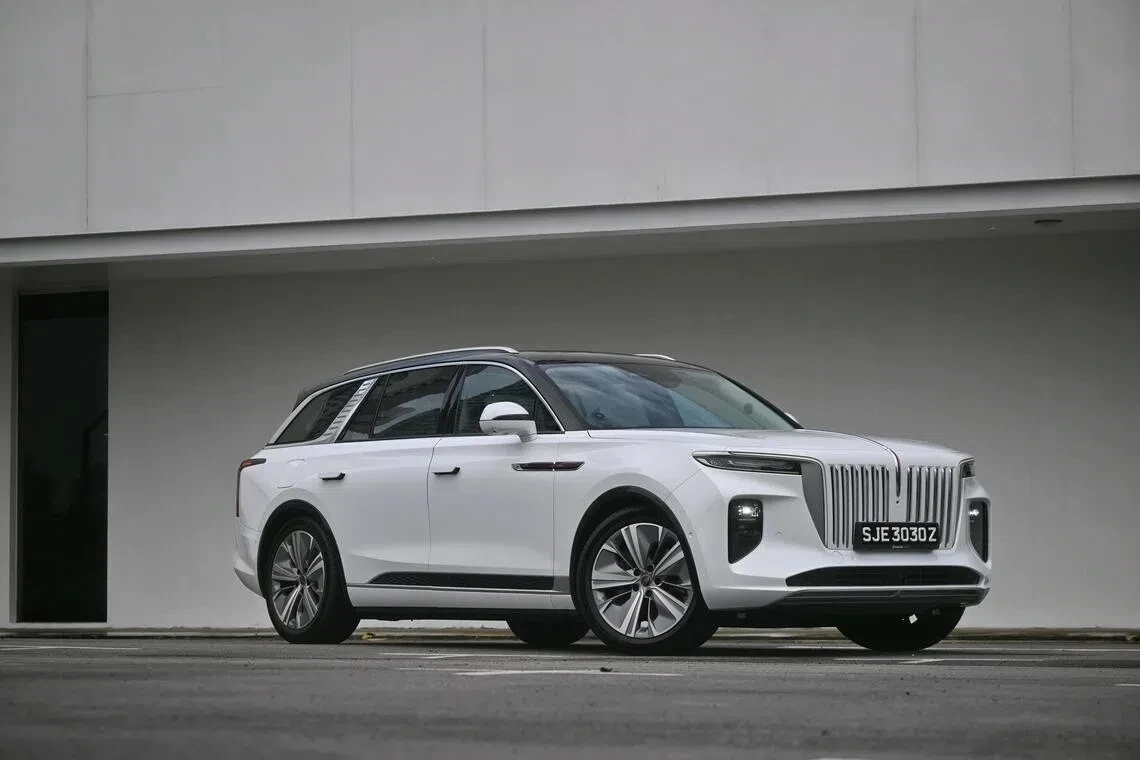
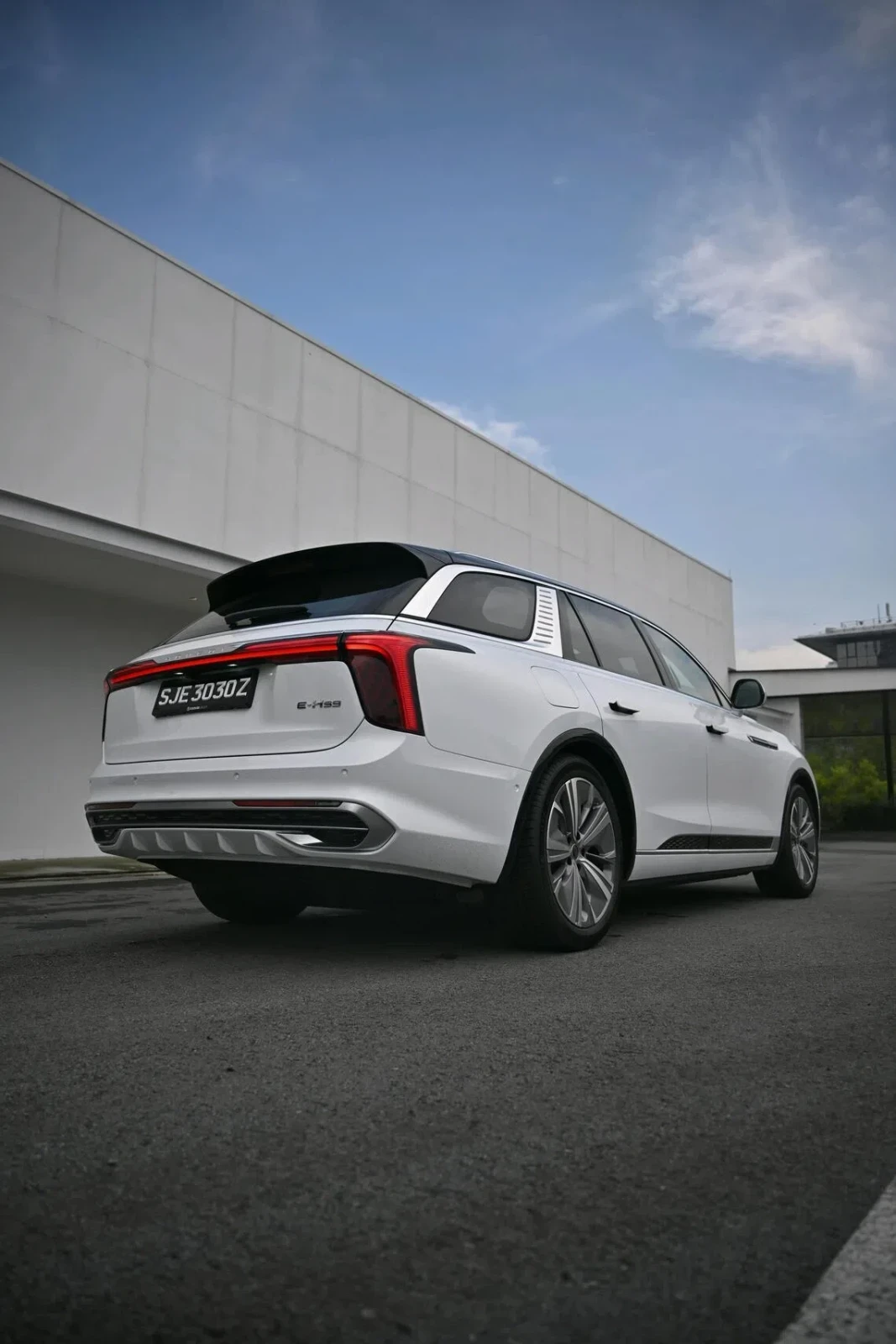
The metallic white Hongqi E-HS9 does not merely move, it arrives.
Its road presence is so commanding that it seems to part traffic, as if led by invisible outriders. Even if there are disgruntled motorists left in its wake, the E-HS9’s double-layered glass keeps the protests from making it into the cabin.
Within minutes of driving this gargantuan electric sport utility vehicle (SUV) that launches the Hongqi brand in Singapore, the defining trait is the near-total insulation from the world outside.
Hongqi may be a newcomer here, but it is actually the oldest Chinese carmaker, dating back to 1958. The brand is part of FAW Group, one of four big state-owned carmakers in China, along with SAIC, Dongfeng and Changan.
Singapore is Hongqi’s first right-hand-drive market, with Hong Kong and Malaysia being next in line. Priced at nearly half a million dollars, this is the priciest Chinese car yet, on the opposite end of the spectrum from the likes of Jaecoo and Aion.
There will be more accessible models to come, but with the E-HS9, Hongqi is making a clear statement of intent. Rather than being yet another Chinese electric vehicle vying to dazzle and charm buyers away from mass-market brands, Hongqi wants a seat among the top-tier luxury carmakers.
While other Chinese marques mimic European designs, Hongqi is as Chinese as a pair of jade chopsticks, giving it a unique identity that is quite refreshing.
At 5,209mm long and 2,010mm wide, the E-HS9 rivals something like the Range Rover Long Wheelbase for size.
Its upright front grille and surrounding details echo the grand architecture of imperial palaces.
Bisecting the grille is a vertical strip of red LEDs, likely a reference to the brand’s name, which translates to “red flag”. Flanked by slim headlights, the car carries the piercing glare of a Chinese opera warrior.
Complementing the prominent front end is the car’s grand and graceful stance, one that rises gently from the rear haunches towards the bonnet.
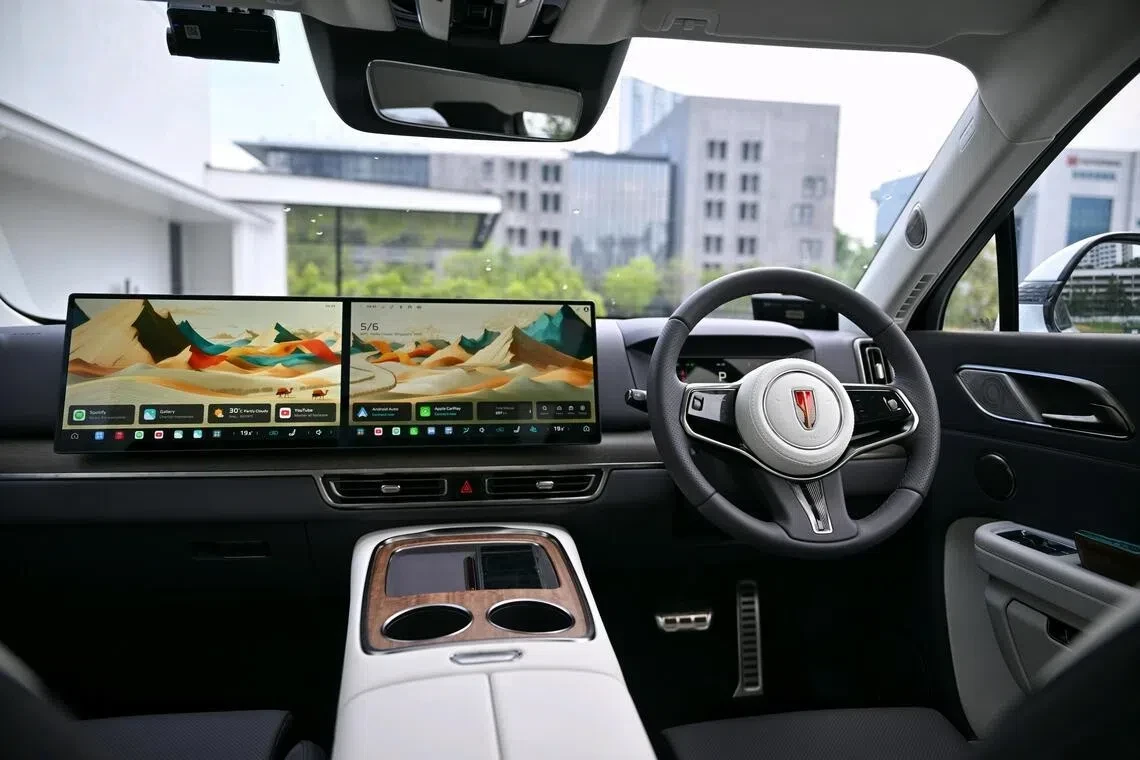
In contrast to the expressive exterior, the E-HS9’s cabin is understated. There are interesting details though, like the digital wallpaper options for the dual infotainment touchscreens. The options include one which looks like a Chinese screen divider with intricately drawn flowers and another with a desert view of the Great Wall of China. It is obvious that the artists did not hold back from expressing their creativity with all that digital real estate.
Demonstrating exceptional restraint – by Chinese car brand standards – the ambient lighting is tastefully applied to only a strip of LEDs on the door panels, and not on every conceivable nook and surface.
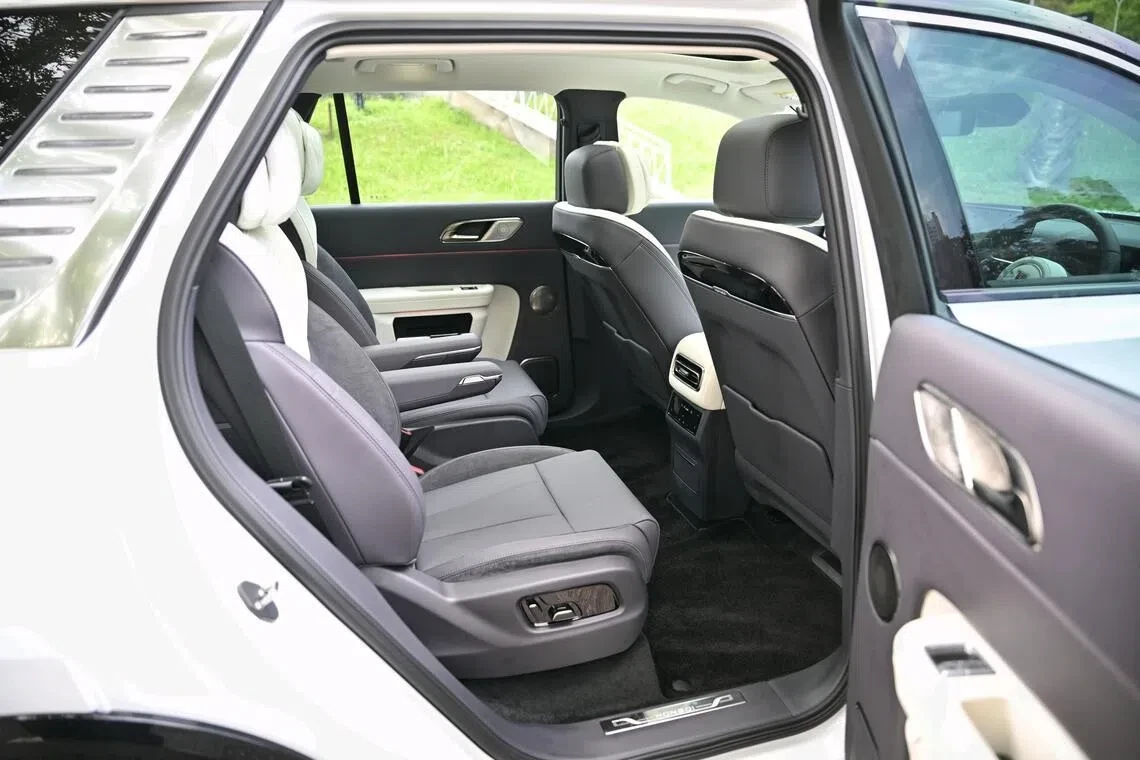
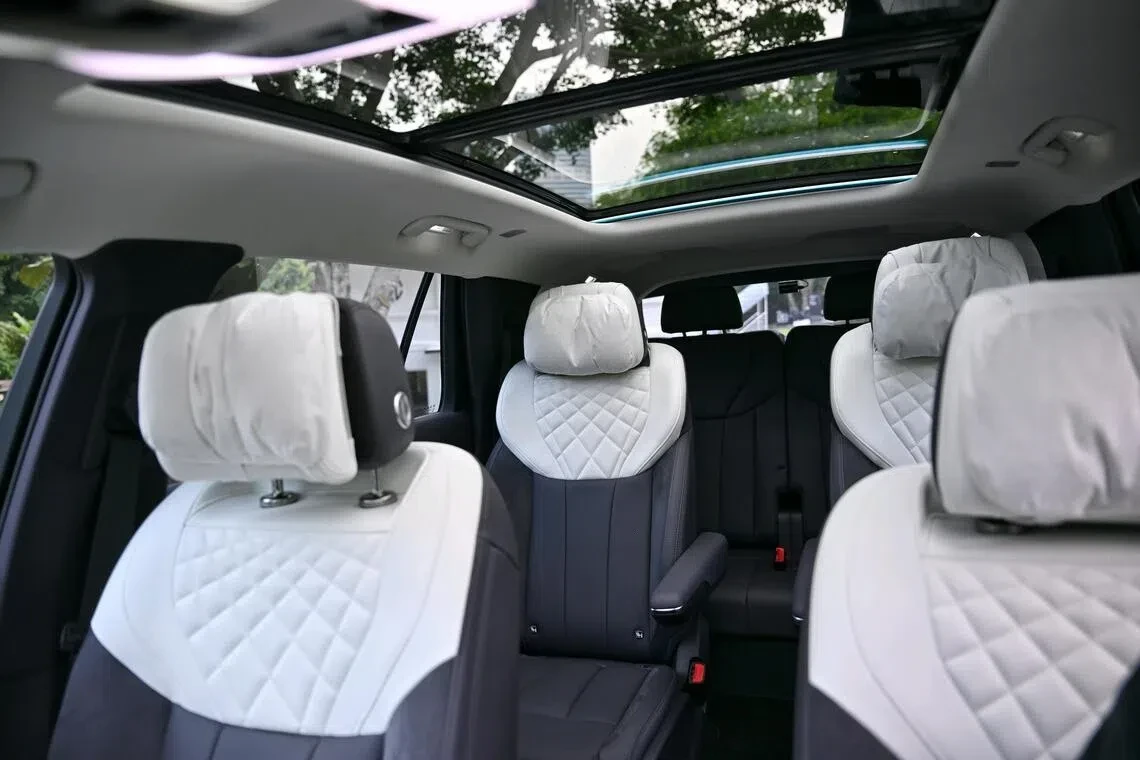
Cabin space on board the SUV is plentiful. The car is configured as a six-seater, with the second-row captain’s chairs spaced sufficiently far apart to create a gangway to the third-row seats.
While knee room is adequate – and expandable by moving the second-row seats forward – the third-row bench feels more suited for occasional use. The head restraints do not even have the soft pillows that are fitted to the other seats.
The rearmost seats can be folded electrically to expand the boot from 255 litres to 1,747 litres, which is more than the 1,700 litres of a BMW i5 Touring. Having multiple mounting points for the retractable cover means that the boot’s contents remain concealed, whether the Hongqi is in four- or six-seater mode.
Despite its enormous footprint, the E-HS9 is surprisingly usable in traffic.
The chiselled profile makes it easier to judge the car’s extremities, while the light steering wheel makes it effortless to wiggle the bumper and rims away from vicious right-angle kerbs and treacherous pillars. The web of video cameras that form the 360-degree view helps to ease the stress of manoeuvring up and down multi-storey carparks.
When it comes to the humps and potholes, the car’s adaptive air suspension proves to be quite capable at soaking them up without upsetting the cabin.
Boot the accelerator from standstill and the bonnet of the E-HS9 will rise gently as the car gathers speed.
For an electric car, throttle response is relatively relaxed, although it does sharpen up a bit in Sport driving mode. At times, it does make you wonder if it really has the Porsche Panamera GTS-level of grunt, but then again, the laid-back dynamics seem to be more in character with the car.
Supposedly, the cars arriving in Singapore in the coming weeks will behave differently. The Hongqi smartphone app, which can unlock the doors and remotely activate charging, is also on the way.
The test car is an advanced pre-production unit and some small kinks will be ironed out in the cars for sale. They include a vibration that comes through when the air-conditioning is at full blast and an intermittent squeak from the steering column.
While they are at it, Hongqi can perhaps further refine the electronic nannies like the lane keeping and forward collision warnings, which are now too high-strung for Singapore roads.
But the E-HS9 is rather competent by most electric vehicle metrics. Its enormous 120kWh nickel cobalt manganese (NCM) battery is srupposedly good for 570km.
Going by the trip computer’s reading during the three-day test drive, a full charge will not see much more than 450km of range, which is probably just enough for daily use. Rather than run the state of charge down to zero, plugging into a typical 50kW direct current charger for 30 minutes should give over 100km of driving range.
But just as Rolexes are not bought solely for their ability to keep time, the Hongqi cannot be measured by its operating range or charging speed, or faulted for the occasional electronic jitters.
Treat it as a rolling status symbol and the E-HS9 is pretty much peerless, with a pomp and stature that even familiar European alternatives that cost a whole lot more will struggle to match.